A snow removal contract is easy to sign in October and easy to regret in February. The price is only part of it. What matters just as much is when the crew shows up, what they clear, how they handle ice, and who pays if a plow blade catches the edge of your lawn. This guide walks through the parts of a residential or commercial contract worth reading closely, with the questions to ask any provider before the first snow.
The short answer: a good snow contract spells out how you're billed, the snow depth that triggers a visit, how soon after a storm the work is done, exactly what gets cleared, the dates the season covers, how salt is used, and who is responsible for damage. If any of those is vague, ask before you sign.
How snow removal is priced
Most providers use one of a few pricing models, and each one shifts the cost of a heavy or light winter differently.
Seasonal contracts, billed monthly
You pay one price for the whole season, usually split into monthly payments. The cost stays the same whether it snows six times or thirty, so your budget is predictable and the provider carries the risk of a heavy winter. Read what the seasonal price covers, because some contracts cap the number of visits or charge extra for very large storms.
Per push
You pay each time a crew plows your property. A light winter costs less and a heavy one costs more. During a long storm a property may be plowed more than once and each push is billed, so ask how many pushes a typical storm takes.
Per event
You pay once per snowfall, however many visits it takes to keep up. Ask how the contract defines an event, because a storm that stops and restarts over two days can count as one or two.
Prepaid bundles
You buy a set number of plow visits up front. Once the bundle is used, service usually continues at a per-push rate, so ask what that rate is and what happens to visits you don't use.
Some providers also bill by the inch or by time and materials. Whatever the model, get the rate in writing and ask how salting is billed, since some contracts include it and others charge for each application.
Our residential snow removal comes three ways: a seasonal contract for the November through April season, billed monthly (often the prepaid season price split into monthly payments), per push service, or a prepaid bundle of plow visits. On the seasonal contract, most standard driveways around Lake Minnetonka run $200 to $250 a month.
Trigger depths: what sets off a visit
The trigger is the amount of snow that has to fall before the crew comes out. A lower trigger means clear pavement more often and usually a higher price. Below the trigger, you're on your own unless the contract says otherwise, so ask what happens with a light snow that turns to ice.
Residential service usually runs on a single trigger. Ours is 2 inches: once accumulation reaches it, your driveway is cleared within 10 hours after snowfall stops. Commercial properties typically choose their trigger, and our commercial snow plowing tiers are zero tolerance (crews on site before the snow starts, clearing continuously), half inch, one inch and two inch.
A trigger tells you when service starts. The contract should also say how soon the work is finished. During storms, our overnight storm crews work through the night.
What's included
Write down what you expect cleared, then compare it with the contract. The usual list:
- The driveway, full width, including any side pad or turnaround
- Walks from the driveway to the front door and any side or back entrance you use
- Steps and stoops, which are often cleared by hand
- The public sidewalk along the street, which many cities require the property owner to clear within a set time
- Salting or ice control, included or billed separately
- The windrow the city plow leaves across the end of the driveway
Our residential service includes the driveway, walks and steps. Ask any provider, us included, how the rest of the list is handled.
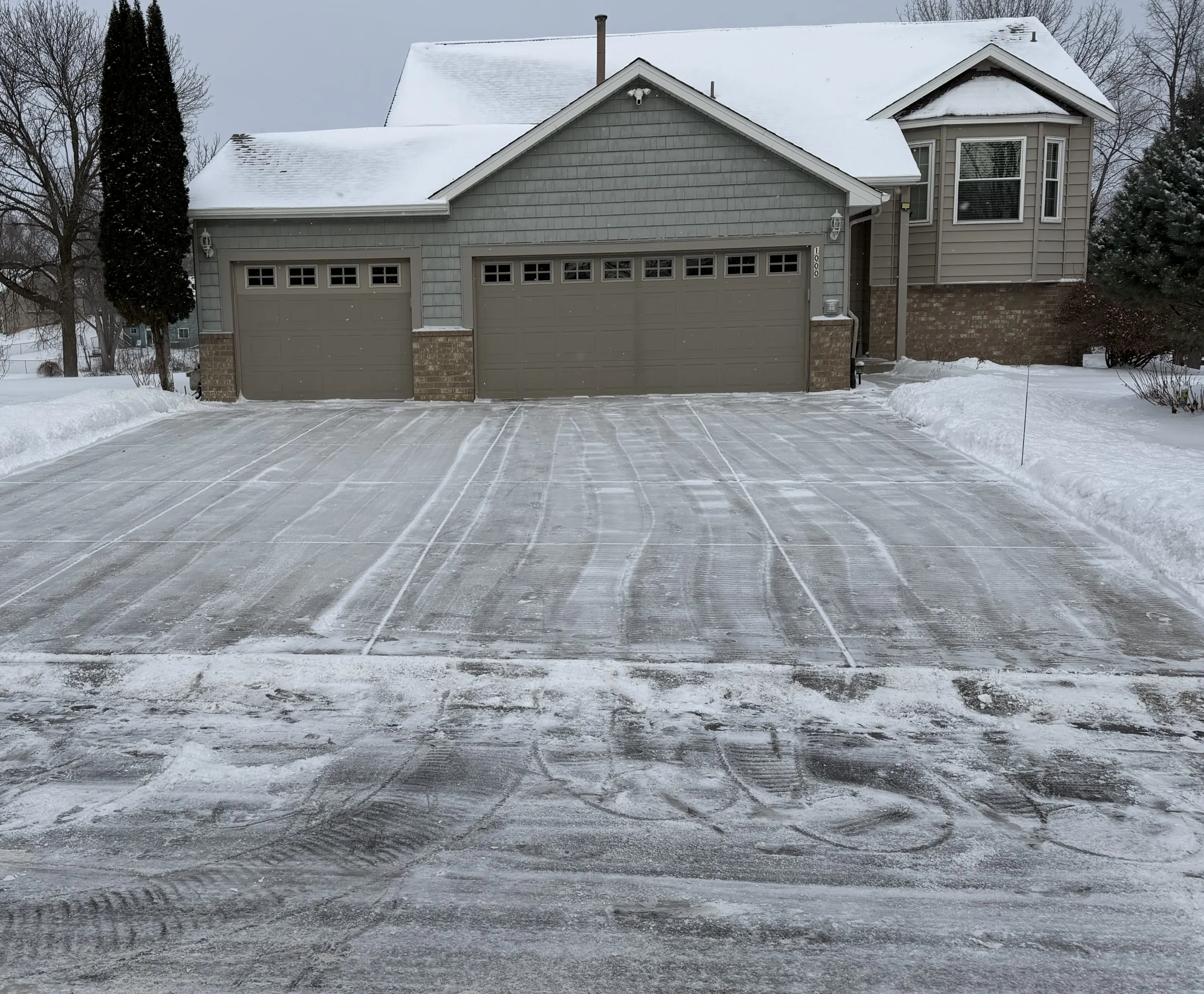
The windrow at the end of the driveway
After a driveway is cleared, a city plow can pass and leave a ridge of heavy snow across the end of it. The City of Plymouth's snow removal guidance suggests clearing a pocket on the left side of the driveway, as you face the street, where the plow can drop its snow. Whether a provider comes back to clear the windrow differs from contract to contract, so ask.
Snow can't go in the street
Under Minnesota Statutes section 160.2715, it is a misdemeanor for anyone other than road authorities and their contractors to deposit snow or ice on a highway, which is why driveway snow can't simply be pushed into the street. A provider needs room on your property to pile it, so agree on where the piles go. A pile against the house in January is meltwater against the foundation in March.
Local sidewalk and parking rules
Cities set their own deadlines for clearing public sidewalks and their own winter parking rules, and they differ a lot around the lake. Our city snow removal pages cite the code sections for each town, for example Edina, Hopkins and Plymouth. The full list is on our snow removal page.
Season dates
Most contracts name a start date and an end date. Snow can arrive before the start date or come back after the end date, so check whether early and late storms fall inside the contract or are billed separately. Our residential season runs November through April.
Driveway markers and property damage
Plow operators often work in the dark and in blowing snow, and the edges of a driveway disappear under the first big storm. Markers along the driveway, walks and beds, set before the ground freezes, show where the pavement ends and the lawn begins. Ask who puts them in and when.
Then ask the damage questions: who repairs turf scraped up along the driveway edge, a cracked paver or a bent mailbox, how you report it and how fast it gets fixed. Ask for proof of insurance as well. Freshwater carries $1M+ liability insurance, and every residential truck runs a rubber cutting edge, so a steel blade never touches your pavers or concrete.
Salt and ice control
Salt helps, but more salt isn't better. The Minnesota Pollution Control Agency's Chloride 101 page says one teaspoon of salt is enough to permanently pollute five gallons of water, and its stormwater manual notes that once chloride is in the water, there is no way to remove it.
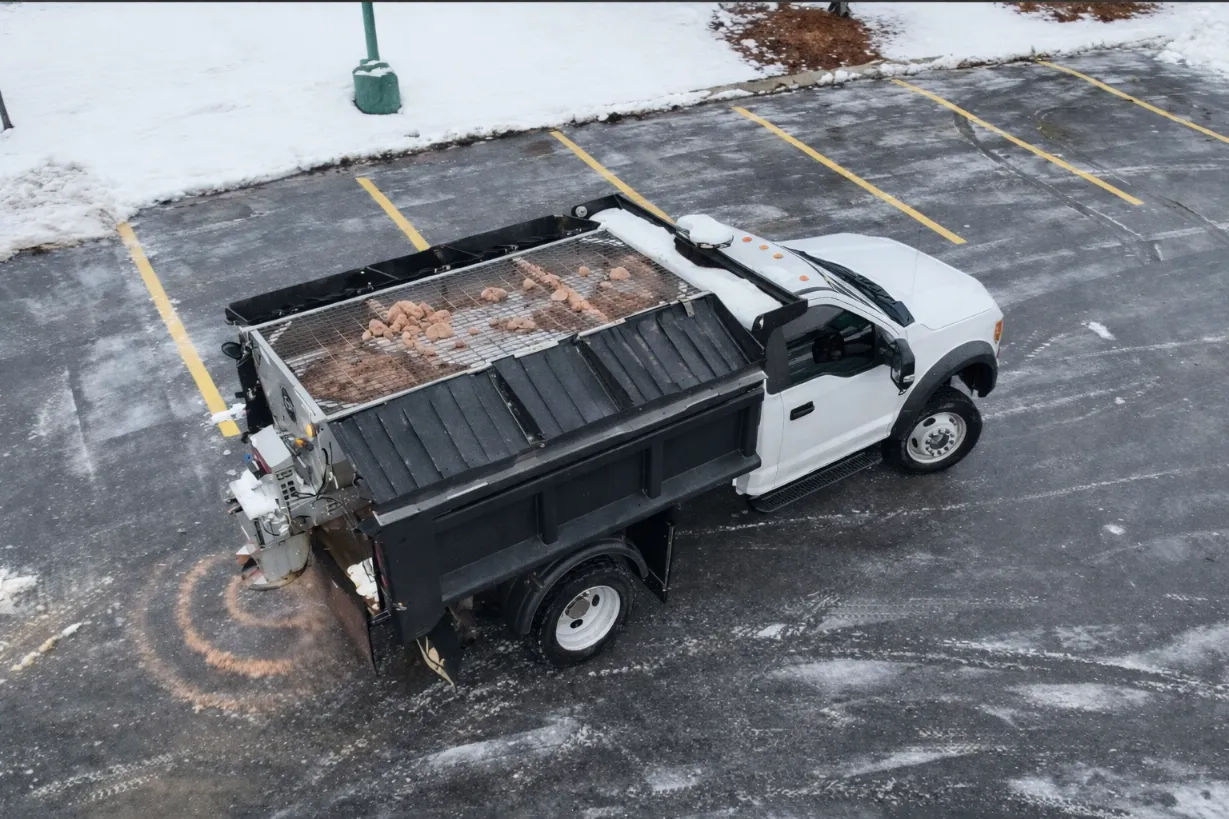
The University of Minnesota's SmartWinterSalt guide boils good practice down to a few habits:
- Remove snow first. Shoveling, plowing and scraping before the snow packs down means little or no salt is needed.
- Use less. About 1 pound of salt per 250 square feet, roughly a 12-ounce coffee cup for a 20 by 12 foot driveway or 10 sidewalk squares, and no more than 4 pounds per 1,000 square feet.
- Space the grains. Salt crystals about 2 to 3 inches apart, not a solid layer.
- Watch the temperature. Most deicers are sodium chloride, which the guide says is only effective down to about 15 degrees, so more of it won't help on a colder day.
The MPCA also encourages people who hire out snow and ice work to choose a contractor trained in Smart Salting. Our crews use salt from our own stockpile, applied under MPCA Smart Salting guidance. When you compare contracts, ask each provider how they decide when to salt and how much to put down.
Commercial contracts
Commercial agreements add a few things to check: the trigger tier for the lot, how sidewalks and entrances are handled, and what happens during a storm that lasts all day. On our commercial accounts, lots run on the contract trigger, and sidewalks are shoveled and salted after every snowfall.
Our current book: 1.5 million square feet of commercial lots on contract and counting, for clients including Thunderbird Aviation at Flying Cloud Airport, Holiday Inn Express and Comfort Inn.
Questions to ask any provider
- How is the contract priced, and what does that price include?
- What is the trigger depth, and what happens below it?
- How soon after snowfall stops is the driveway cleared?
- Do crews work through the night during storms?
- Are the walks, steps and public sidewalk included?
- Is salting included or billed per application, and how do you decide how much to use?
- Do you come back for the windrow the city plow leaves?
- What dates does the season cover, and how are early or late storms handled?
- Who puts in driveway markers, and when?
- Who pays for damage to turf, pavers or mailboxes, and can I see proof of insurance?
- Where will the snow be piled?
Snow removal contract FAQ
What's the difference between seasonal, per-push and per-event snow removal contracts?
A seasonal contract is one price for the whole winter, usually billed monthly, no matter how often it snows. A per-push contract bills each time a crew plows the property. A per-event contract bills once per snowfall, however many visits it takes. Seasonal gives you a fixed budget; per push and per event cost less in a light winter and more in a heavy one.
What is a trigger depth?
It's the amount of snow that has to fall before a crew comes out. Residential contracts usually use a single trigger; ours is 2 inches. Commercial contracts often choose from tiers, and ours are zero tolerance, half inch, one inch and two inch.
What should a residential snow removal contract include?
At minimum: the driveway, the walks and steps, the trigger depth, how soon the work is done after snowfall stops, whether salting is included, the season dates, and who is responsible for damage. Our residential service includes the driveway, walks and steps, cleared within 10 hours after snowfall stops once 2 inches has accumulated.
Who clears the snow the city plow leaves at the end of my driveway?
It depends on the contract. Some providers come back for the windrow and some don't, so ask before you sign. The City of Plymouth suggests clearing a pocket on the left side of the driveway, as you face the street, so the plow has somewhere to drop its snow.
When does the snow removal season usually run?
Each contract names its own dates, so check them. Ours runs November through April. Ask whether a storm before the start date or after the end date is covered or billed separately.
How much salt should go on a driveway?
Less than most people use. The University of Minnesota's SmartWinterSalt guide suggests about 1 pound per 250 square feet after the snow has been cleared, roughly a 12-ounce coffee cup for a 20 by 12 foot driveway, and no more than 4 pounds per 1,000 square feet. Ordinary rock salt only works down to about 15 degrees.
Can a snow removal company push snow into the street?
No. Under Minnesota Statutes section 160.2715, depositing snow or ice on a highway is a misdemeanor for anyone other than road authorities and their contractors, so driveway snow has to be piled on your property.
Who pays if a plow damages my lawn or pavers?
That should be written into the contract. Ask who repairs scraped turf, cracked pavers or a bent mailbox, how to report it, and ask for proof of insurance. We carry $1M+ liability insurance, and every residential truck runs a rubber cutting edge.
How much does seasonal snow removal cost around Lake Minnetonka?
With Freshwater, most standard driveways run $200 to $250 a month on a seasonal contract for the November through April season, billed monthly. We also offer per push service and prepaid bundles of plow visits. Other providers price differently, so compare what each contract includes, not just the monthly number.