WATERSHED COMPLIANCE EXPERTS
Premium Shoreline Restoration on Lake Minnetonka
Heavy Riprap & Erosion Control for Lake Minnetonka Estates
Your shoreline is the most valuable, yet most vulnerable, part of your lakeside estate. Constant wake action, severe storm runoff, and the devastating force of winter ice heave can rapidly degrade your property line and compromise your foundation. Freshwater Landscaping builds lasting, structural solutions designed specifically for the extreme conditions of Lake Minnetonka and the surrounding lakes. From securing complex MCWD permits to executing heavy DNR-compliant riprap and deep-rooted native buffer plantings, we provide uncompromising protection for your waterfront investment.
Consult With A Shoreline Specialist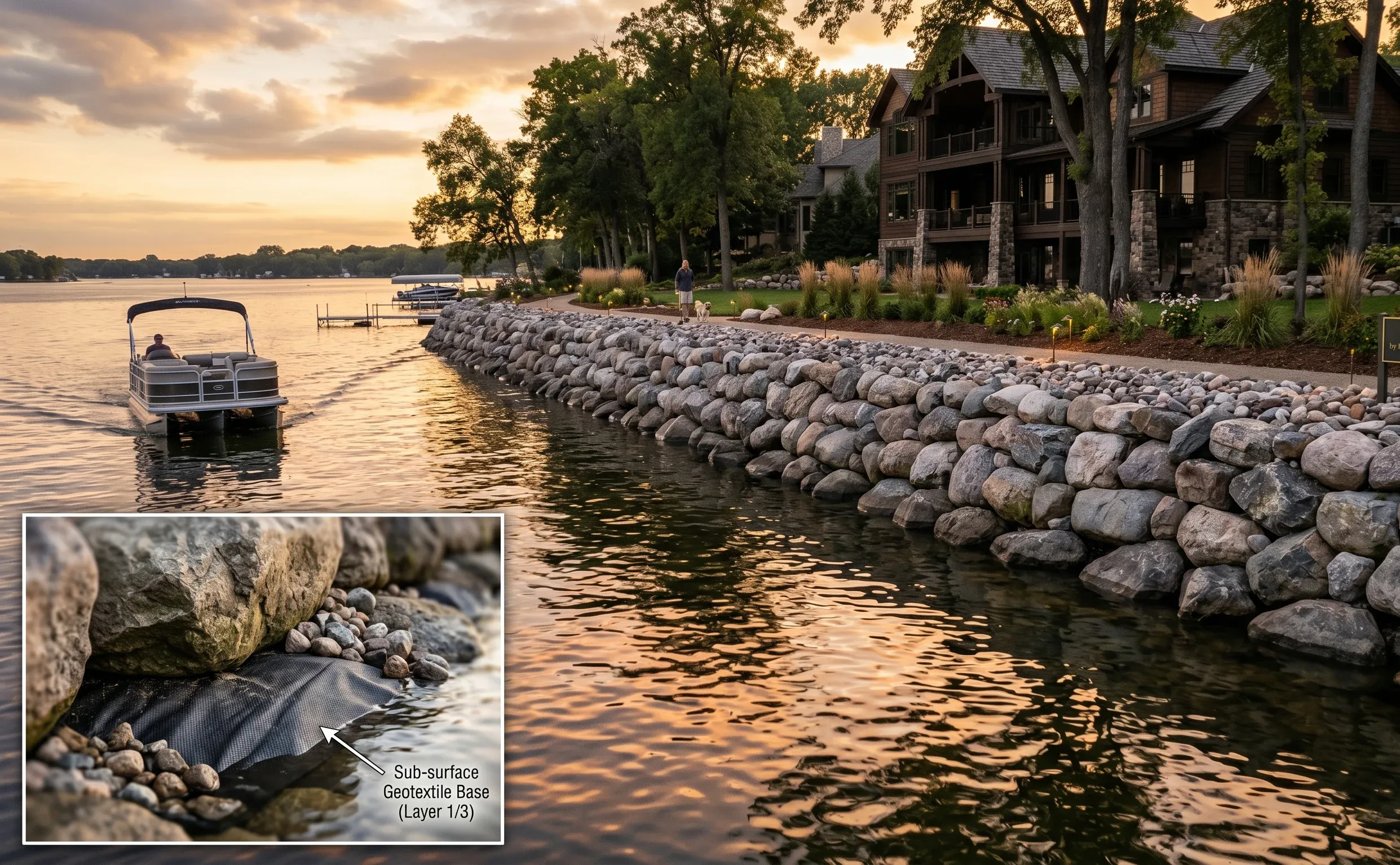
DNR-Compliant Heavy Riprap
The constant, high-energy wake action from recreational boating on Lake Minnetonka will systematically strip away unprotected soil. We install heavy riprap—utilizing precise sizing of fieldstone or glacial boulders—to absorb and dissipate this kinetic energy before it breaches your bank.
A proper riprap installation is highly structural. We do not simply dump rock on a hill. Our operators carefully grade the bank to a compliant 3:1 slope, install heavy-duty, woven geotextile fabric to prevent sub-soil washout, and meticulously stack the stone to ensure long-term, interlocking stability.
Riprap Installation Focus:
- Custom Grading to Stable Shoreline Slopes
- Commercial-Grade Geotextile Fabric Underlayment
- Interlocking Glacial Boulder & Heavy Fieldstone Placements
- Seamless Integration with Existing Docks & Boat Houses
Native Buffers & Bio-Engineering
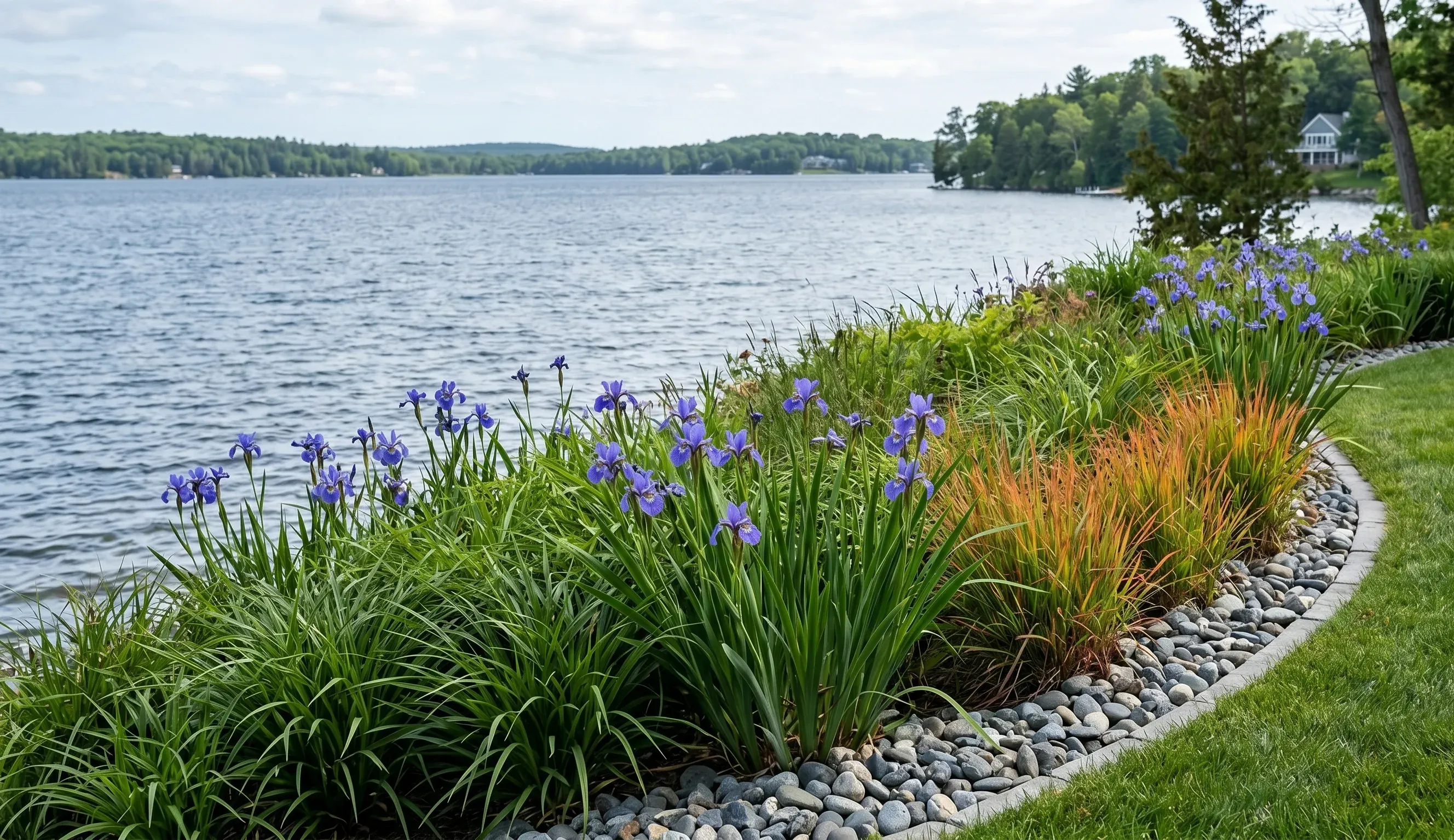
Watershed districts aggressively enforce the preservation of natural shorelines. The most effective way to secure a steep lakeside slope is through bio-engineering: combining structural grading with the massive, deep root systems of Minnesota native plants.
We utilize specialized hydroseeding applications and hand-planted native cultivars—such as deep-rooted Sedge grasses, Joe-Pye Weed, and Blue Flag Iris. These root networks grow several feet deep, acting as living rebar that binds the soil together while simultaneously creating a critical biological filter that prevents lawn chemicals from running off into the lake.
Bio-Engineering Solutions:
- Targeted Hydroseeding for Immediate Steep-Slope Erosion Control
- Architectural Native Plant Design for High-Contrast Aesthetics
- Installation of Coir Logs & Biodegradable Erosion Blankets
- Lake-Safe Organic Weed Mitigation within the Buffer Zone
Ice Heave Repair & Mitigation
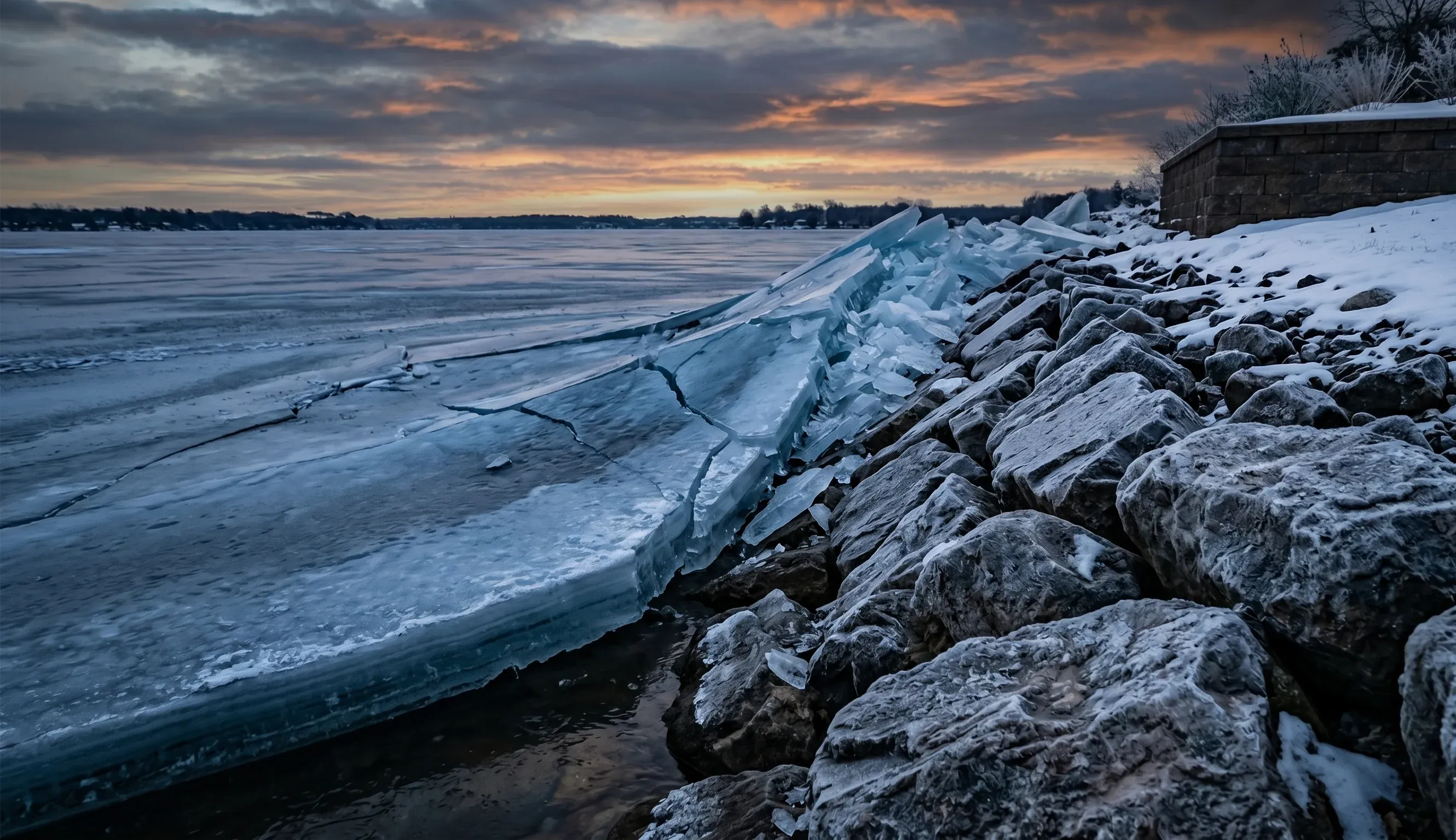
When the massive sheet of ice on Lake Minnetonka expands during rapid temperature fluctuations, it acts like a slow-motion bulldozer, capable of destroying retaining walls, uprooting mature trees, and pushing thousands of pounds of soil inland into your yard.
If you have suffered an ice ridge blowout, our heavy equipment team can completely excavate and restore the damaged bank. More importantly, we plan ice heave mitigation strategies. By correcting the shoreline angle and utilizing deep aggregate trenches beneath heavy boulder riprap, we create a defensive slope that forces expanding ice to harmlessly slide up and over the stone face, rather than digging into your property.
Winter Damage Recovery:
- Complete Excavation & Relocation of Displaced Soil/Ice Ridges
- Structural Re-Grading of the Shoreline Impact Zone
- Deep Aggregate Base Installation to Resist Future Heaving
- Emergency Spring Cleanup & Bank Stabilization
MCWD & DNR Compliance Authorities
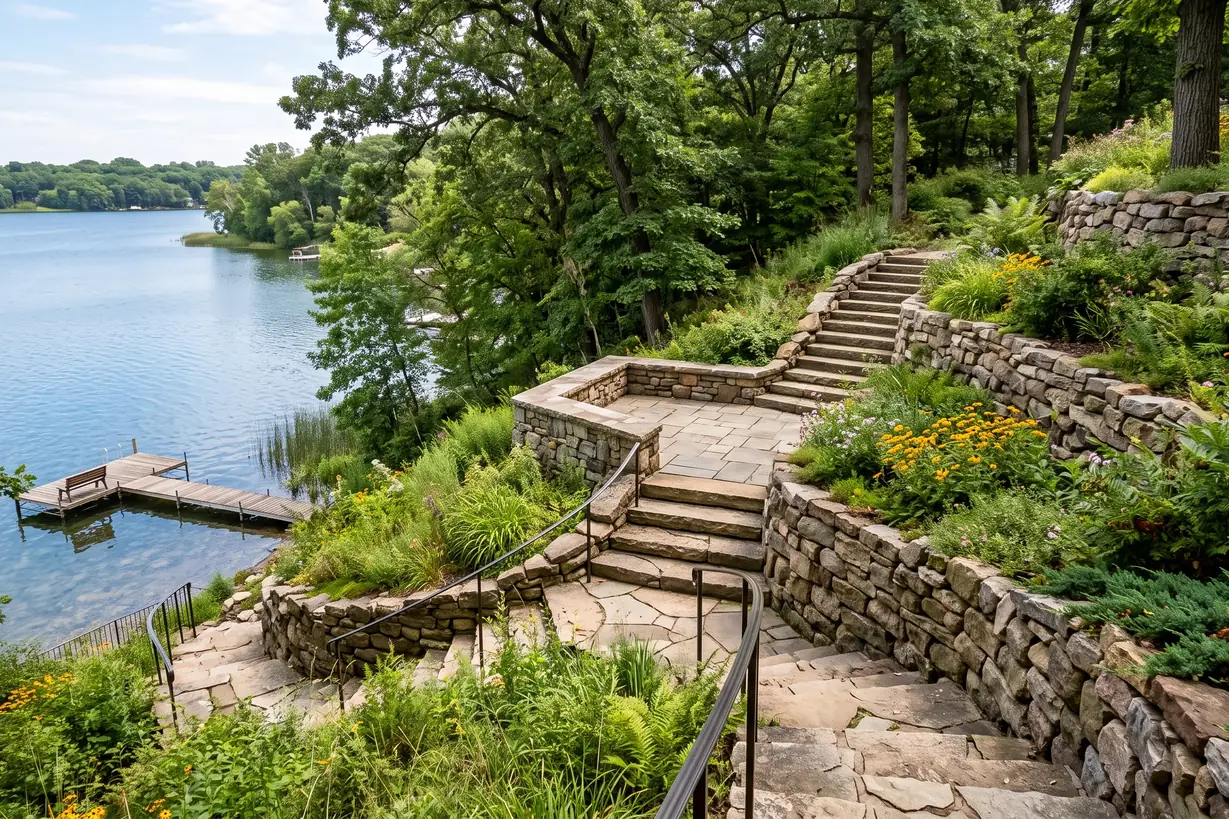
Executing shoreline work without proper authorization around Lake Minnetonka is a guaranteed path to severe fines, project shutdowns, and mandatory tear-outs. Lake Minnetonka is heavily regulated by the Minnesota DNR, the Minnehaha Creek Watershed District (MCWD), and individual city ordinances.
We handle the permitting from start to finish: submitting the applications and drawings, coordinating site inspections, and building to the hardcover limits and buffer zone requirements that apply to your property.
How We Handle Permitting:
- MCWD, DNR and city permit applications handled for you
- Site plans prepared, with an engineer brought in when a project needs one
- Projects planned around your property's hardcover limits
- Final inspections coordinated with the city and watershed district
Shoreline Restoration Service Areas
Restoring and stabilizing shorelines for lakefront homes across the Lake Minnetonka area:
Shoreline Restoration FAQ
Shoreline restoration costs vary significantly based on linear footage, shoreline access for heavy machinery, and the severity of the erosion. Minor native buffer restorations and hydroseeding typically range from $4,000 to $9,000. Comprehensive, DNR-compliant heavy riprap installations with aggregate bases usually start around $10,000 and scale upward depending on the structural work required to neutralize severe wake action and ice heave.
Yes. Any structural alteration to the shoreline of Lake Minnetonka and surrounding lakes strictly requires permits from the Minnehaha Creek Watershed District (MCWD) and heavily involves the Minnesota DNR. We manage the permitting process for your shoreline work.
Ice heave occurs when expanding lake ice pushes against the shore, acting like a slow-moving bulldozer. We mitigate this catastrophic damage by grading shoreline slopes to precise, compliant angles and utilizing heavy, interlocking riprap boulders seated on deep, geotextile-lined aggregate bases. This structural wedge forces the ice to slide up and over the rock rather than bulldozing your soil inland.
Native buffer plantings are encouraged along Lake Minnetonka because species like Sedge grasses, Blue Flag Iris, and Little Bluestem have incredibly deep, dense root systems. These roots act as structural rebar in the soil, holding the bank together against wave erosion while simultaneously filtering out chemical runoff before it can breach the lake ecosystem.
Request a Shoreline Audit
Secure your waterfront property. Fill out the form below and we'll contact you shortly.