TONKA BAY, MINNESOTA
The city plows your street more than once per storm. Tonka Bay begins snow removal when accumulation reaches two inches, and on an overnight snowfall the crew is typically dispatched at or before 4:00 a.m. That first run is about access, opening every street so emergency vehicles can move, which after a typical 3 inch snowfall can take three to four hours. Second and third passes come afterward to widen the roadway back out to its full width.
Every one of those passes leaves another berm at the foot of the driveway. Shovel the apron open at 6:00 a.m. and a widening run can seal it again before lunch, which is how one snowfall turns into clearing the same eight feet of pavement two and three times in a morning.
Our clock starts when the snowfall stops instead of when a truck rolls out. Service runs on a 2 inch trigger and the drive is cleared within 10 hours after snowfall stops, which puts our visit after the city has finished with the street rather than in the middle of its sequence. The apron gets opened once, by us, not twice by whoever lives there.
Timing like that only holds on a route with a hard cap, since the crew can never be carrying more properties than a single shift will finish. Once the Tonka Bay route is full, it closes for the winter. Sign up before the first snowfall and the rest of the season looks after itself.
Homeowners around Lake Minnetonka have left us 80+ five-star Google reviews.
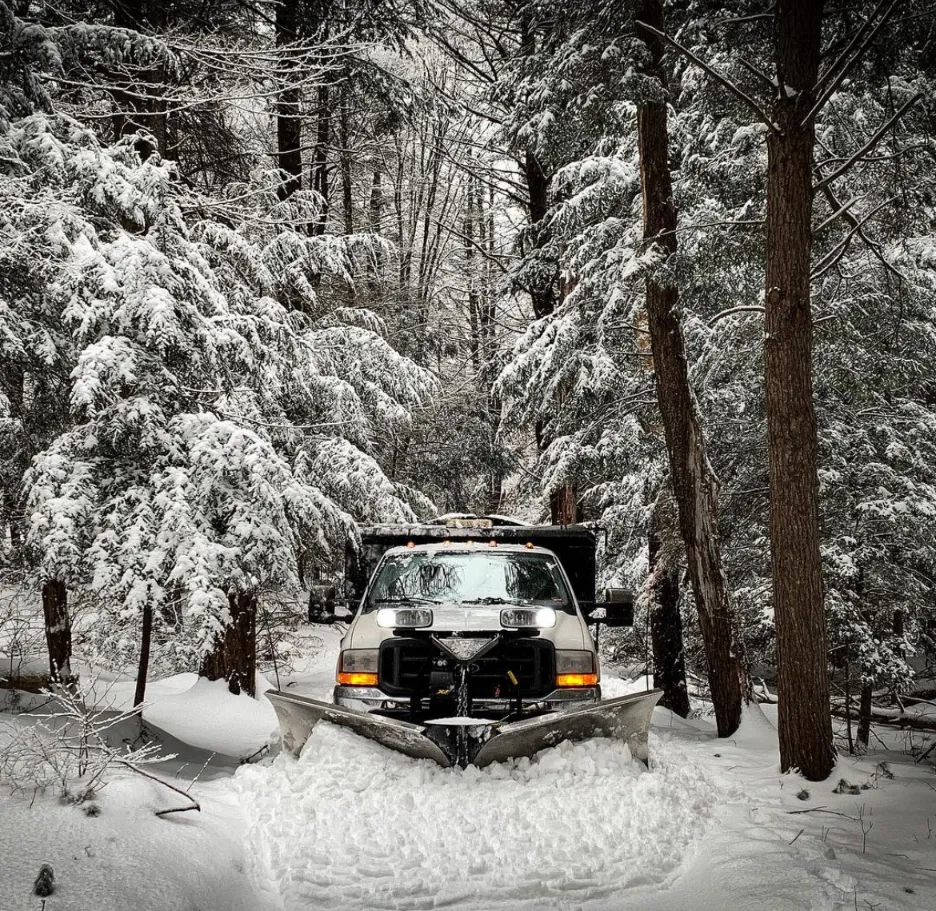
Tonka Bay runs its winter with a three-person snow removal force and four machines: one 2 1/2 ton truck, one 1 ton truck, a front end loader and a skid loader, covering more than eight miles of city streets. That is a lean crew doing a clear job well. Operations begin when snow accumulates to a depth of two inches or more, dispatch on an overnight snowfall is typically at or before 4:00 a.m., and the goal of the first run is to open all streets as soon as possible so emergency vehicles have a way through, which after a typical 3 inch snowfall can run three to four hours.
What lands on your driveway is the part that comes next. Second and third passes follow the opening run to widen the roadway to its full width, and each one carries more snow to the edge of the pavement. Clear the apron before that sequence is finished and you will be clearing it again when it is.
So we time the visit to the weather rather than to the street. Service triggers at 2 inches and the drive is open within 10 hours after the snowfall stops, which is late enough that the widening is behind us and early enough that nobody is waiting on a second day. The berm at the foot of the drive comes off as part of that visit, not as something you call about.
The plows themselves are part of the answer. A rubber cutting edge rides on every residential truck, because steel hunts out the seam between two pavers and the front lip of a concrete apron and shaves a bit each time it crosses one, with the bill turning up months later disguised as ordinary wear. Stakes go in along the drive before freeze-up too, and they earn their keep on these lots: plowing can damage sod while the ground is still soft, and the city's right-of-way reaches 5 to 10 feet past the edge of the street, which puts a good share of what anybody would call the front yard inside it.
Our own operation is larger for the simple reason that it covers more than one city. A storm puts 15 to 20 crew out the door with three plow trucks, two sidewalk machines, two wheel loaders and two compact track loaders, and the backup crew is named before the storm arrives rather than rounded up once it has. Each stop lands in Yeti, our snow management platform, as a time-stamped service record with photos attached.
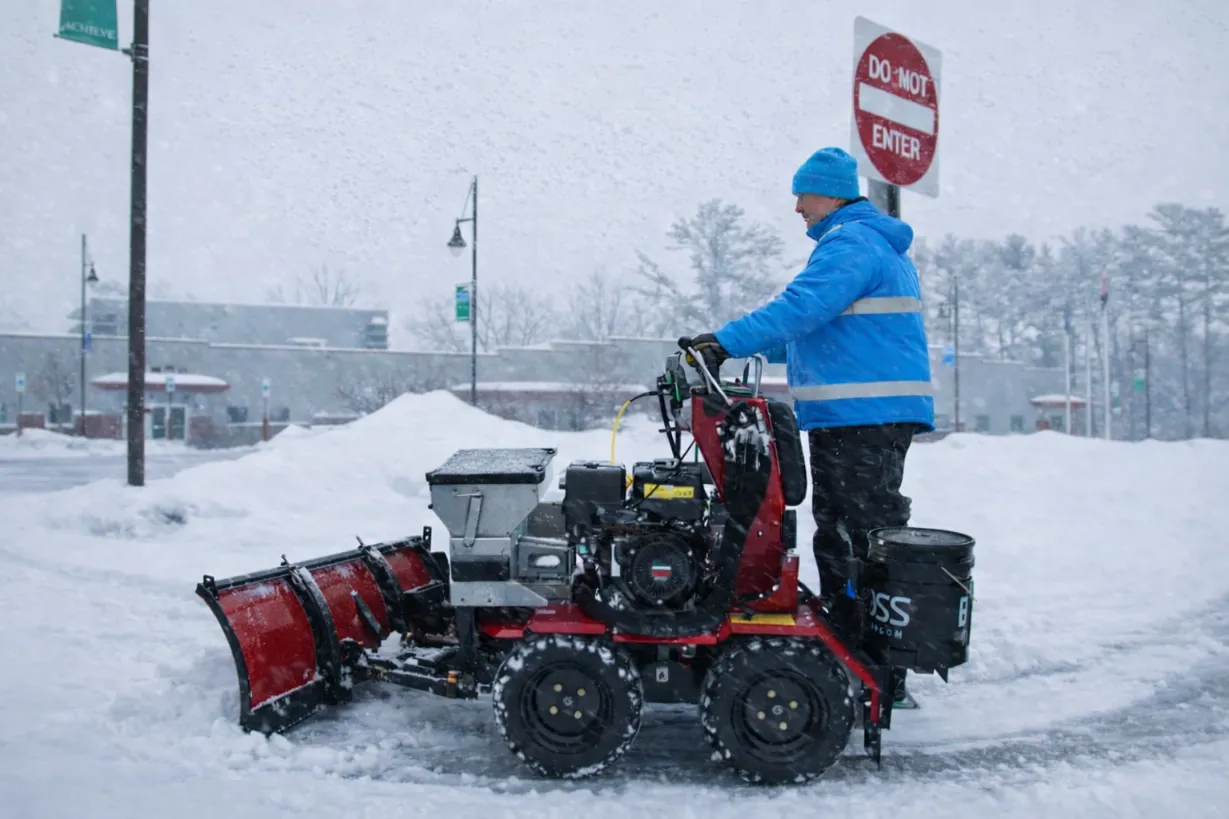
The driveway is the part people watch and the walk is the part that decides the morning. Walks and steps are included in residential service and handled on that same stop, which keeps the trip from the car to the door from being the thing nobody gets to.
Snow off a walk has to land somewhere, and on a small lot the closest open ground is usually the strip between the pavement and the street. That strip is right-of-way, 5 to 10 feet of it by the city's reckoning, and it is where the mailbox and the yard light are standing. The city expects those to be built sturdily enough to withstand snow rolling off a wing plow, which is a fair description of how much weight ends up out there, so we pile away from them instead of against them.
Stairs and stoops never see a machine here. Auger housings and metal edges take the nosing off a tread a bit at a time, so treads, landings and side doors get shoveled, and that goes double for the older stone entries around Old Village where one damaged piece is worth more than every minute a machine might have saved. Larger driveways, longer walks and extensive step work are priced accordingly.
Ice is a second event rather than part of the first one. A drive that came clean in the morning spends the afternoon collecting meltwater in its low spots and wheel ruts, and once the sun drops, that water sets into a film nobody can pick out from the kitchen window. It is the day after a storm, more often than the day of it, that puts somebody on the ground.
We treat drives, walks and entry steps following MPCA Smart Salting best practices, which comes down to placing material where the refreeze actually collects instead of broadcasting it across the whole slab. In a town this small and this close to the water, everything that runs off the pavement has a short trip ahead of it, so using less is not a slogan here. It is the only sensible way to treat a surface.
Supply is the other half of ice control. We buy the season's salt up front and hold 100 tons of it at the shop, so the stretch after a major storm when material gets hard to find is a problem we solved in October rather than one you hear about in January.
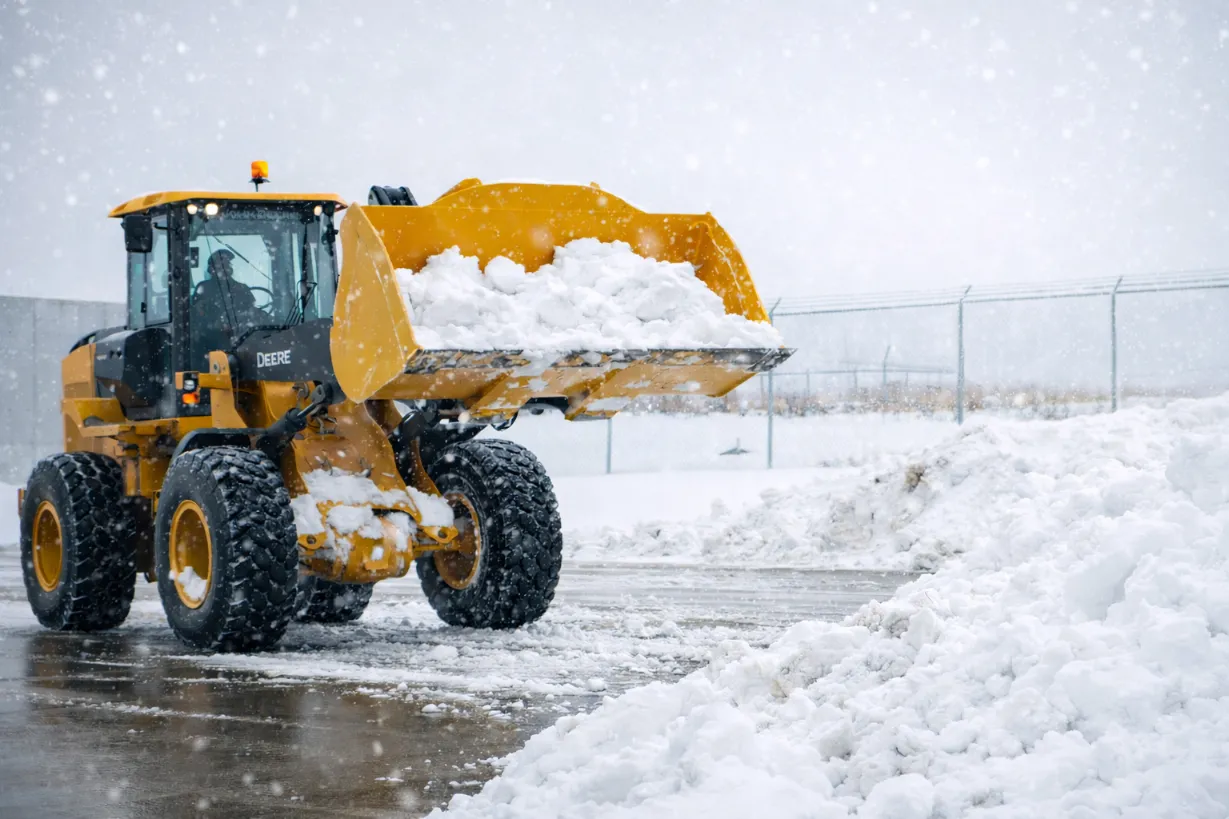
Every pass a plow makes is a decision about where snow goes, and a driveway holds a fixed number of those decisions. On a compact lot the answer arrives early in the winter. The banks on either side grow inward, the turnaround stops turning anything around, and what used to be a clear look up the street from the end of the drive becomes a gap between two walls of old snow.
There is a second source feeding those banks that most towns do not have. Because the city comes back to widen the street after it has already opened it, the pile at the head of the drive keeps growing after the storm is over, and it ends up bigger than anything your own clearing built. Once the edges are full we relocate the piles to open ground elsewhere on the property, or load them out and haul them off site, rather than adding height and making the next storm harder than it needs to be.
A standard Tonka Bay driveway runs $200 to $250 a month, November through April, quoted as one seasonal price and billed monthly rather than assembled out of storm charges.
Where a property lands inside that range comes down to three questions, all of them answerable while standing in the driveway.
Square footage of pavement. The standard is two cars wide, about 20 feet, by up to 60 feet long, which works out near 1,200 square feet. Each additional 1,000 square feet adds roughly a pass, whether that surplus comes from width, length, a turnaround or a parking pad off to one side. Anything with an approach longer than 150 feet gets a quote of its own.
How much of it is hand work. Fifty linear feet of walk and four steps are carried in the base rate. Past that the cost climbs by time rather than by distance, because a walk that wraps the house, a second entry or a full stair run is shovel and blower work from one end to the other.
Somewhere to put the snow. A lot with room at the end of the drive to absorb a winter's worth of pushing adds nothing to the price. It climbs where the pavement is boxed in, by a wall, a bed of plantings, a garage at the dead end, or a right-of-way strip with a mailbox standing in the only clear spot. Relocation and hauling carry a quote of their own.
How the billing works. Seasonal is a single price divided across the six months, and seasonal properties are cleared ahead of per push work, which we also do. One phone call settles which of the two suits the property.
All of it assumes the 2 inch trigger, the same depth the city uses to start its own operations. Asking for a tighter one costs more than a bigger driveway would, since it changes how often we come rather than how long we stay, so those properties are quoted individually.
The City of Tonka Bay begins snow removal when snow accumulates to a depth of two inches or more, and on an overnight snowfall its crew is typically dispatched at or before 4:00 a.m. The first priority is access, opening all streets as soon as possible so emergency vehicles can get through, which after a typical 3 inch snowfall can take three to four hours across the more than eight miles of streets the city maintains. Second and third passes follow to widen the roadway to its full width, and each of those carries more snow to the edge of the pavement. We build the Tonka Bay route around that sequence, which is why our standard is 10 hours after the snowfall stops and why the apron gets cleared once the widening is done rather than in the middle of it. Snow plowing details from the City of Tonka Bay.
Freshwater Landscaping
3425 Shoreline Dr Ste B, Wayzata, MN 55391
(612) 999-8067
Office: Mon-Sun 8am-6pm
A standard Tonka Bay driveway runs $200 to $250 a month from November through April, written as one seasonal price and billed monthly rather than invoiced storm by storm. Larger driveways, longer walks and extensive step work are priced accordingly, and the quote names your bracket before the season starts rather than after the first big event.
Service triggers at 2 inches, the same depth the city uses to begin its own operations, so accumulation alone puts you on the route for that storm. Your driveway is cleared within 10 hours after the snowfall stops, a window wide enough for the city to finish widening the street before we open the apron.
Yes, and clearing it once is the whole point. The city opens every street first so emergency vehicles can get through, which can take three to four hours after a typical 3 inch snowfall and often starts at or before 4:00 a.m., then makes second and third passes to widen the roadway to its full width. Each of those passes leaves another berm at the foot of the driveway, so we come after the widening rather than between passes, and taking that berm off is part of the visit instead of a separate charge.
They are included in residential service and cleared on the same stop as the drive, not on a return trip later in the day. Steps, stoops and side entries are done by hand, since a machine takes a little off a stair edge every time it crosses one. Larger driveways, longer walks and extensive step work are priced accordingly.
Residential trucks run rubber cutting edges, and drive edges are staked before the ground freezes so a crew working before dawn can see where the pavement stops. The right-of-way is worth knowing about as well: the city puts it at 5 to 10 feet beyond the edge of the street, notes that plowing can damage sod while the ground is still soft, and says that although it will repair a permitted structure that was clearly marked and obviously struck by a blade or wing, damage caused by the snow itself falls to the property owner. We stack away from mailboxes, lights and plantings for exactly that reason.
Every Tonka Bay visit goes into Yeti, our snow management platform, with the service record time-stamped and photos attached. That leaves you a dated picture of the drive and the ground beside it as the crew left them, which is the useful thing to have in April when somebody asks how a mailbox post or a strip of sod ended up the way it did.
Yes. Commercial work is scheduled by trigger depth, and the choices are 2 inch, 1 inch, half inch, or zero tolerance with crews staged on site clearing continuously while the snow falls. It is logged the same way residential service is, so a manager asking who was on the lot at three in the morning gets a time-stamped record and photos rather than somebody's recollection.

A fair number of our winter clients came to us in warm weather first, for a patio, a wet corner that never dried out, or a tree that had grown too close to the roof. Staying on through the winter was the easy part, because by then the crew already knew the property.
It runs in reverse just as often. Whoever clears your drive in January is who can rebuild it in June, hold the lawn on a weekly route all summer and take care of the fall cleanup, and they turn up already knowing where the pavement actually ends.
That is also what makes the winter work cautious. People who have spent a summer setting pavers on a compacted base have no appetite for spending a winter dragging steel across them, which is why our trucks do not carry steel.
Routes fill and then we're closed. Tell us about your property and what needs clearing, and we'll get you a spot. The storm-alert checkbox is optional. Check it and you'll get a text the moment crews head out.