ST. LOUIS PARK, MINNESOTA
In St. Louis Park, a business has four business hours to clear the public sidewalk after snowfall stops. If the start of the next business day comes sooner, that is the deadline instead.
The duty covers the snow a street plow pushes back onto the sidewalk, too, which means the walk isn't done just because it was shoveled once.
That is why sidewalks don't wait on the lot trigger with us. The lot runs on the depth you choose, and the sidewalks get shoveled and salted after every snowfall. Our shop and equipment are in Wayzata, and every visit is logged with time stamps and photos.
Clients across the Lake Minnetonka area have left us 80+ five-star Google reviews.
1.5 million square feet of commercial lots on contract and counting, for clients including Thunderbird Aviation at Flying Cloud Airport, Holiday Inn Express and Comfort Inn.

The value of a plowed lot is decided before anyone parks in it. Stores need lanes and stalls open before opening, offices before the first shift, and apartment buildings before residents leave for work.
Crews clear the lot at the trigger depth your contract sets. During daytime storms they return while the lot is open so drive lanes don't fill back in, and snow is piled where it takes the fewest stalls and leaves your exits with a clear view of traffic.
Behind that is a crew of 15 to 20 people, scaled to each storm, with backup equipment in every class so a breakdown never stops the route: two wheel loaders, two compact track loaders, three plow trucks and two sidewalk machines.
Storage is tight in St. Louis Park. The city notes that boulevards are generally only four to five feet wide, and it is against city ordinance to push or blow snow back into an alley. On a crowded lot, that makes where the pile goes as important as how fast it gets moved.
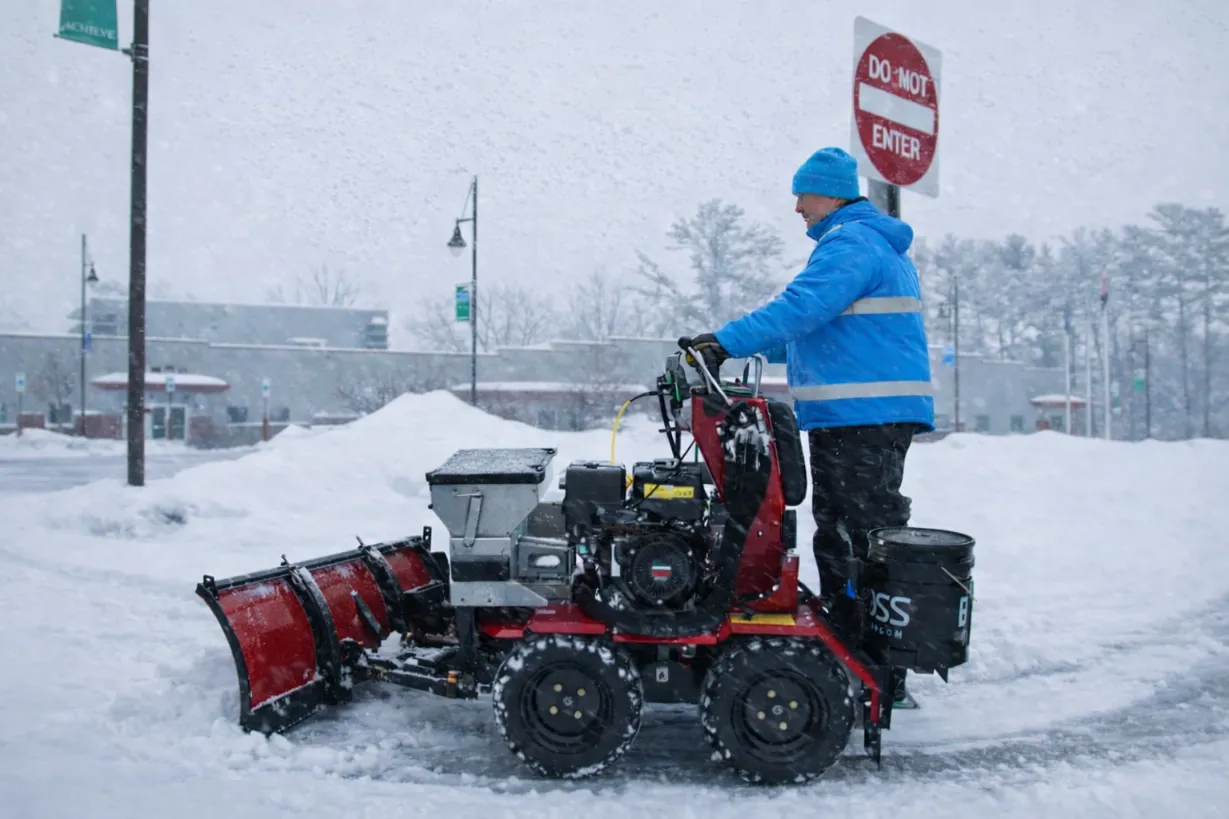
St. Louis Park City Code Section 24-342 puts the public sidewalk on the owner or occupant of the property next to it. For commercial property, the deadline is four business hours after snowfall stops or the start of the next business day, whichever is shorter. Homes get six hours of remaining daylight or until noon the next day, whichever is longer.
Two details make the commercial deadline harder than it sounds. It includes snow plowed off the street onto the sidewalk, and it covers the walks and ramps that lead to a crosswalk, not just the straight run in front of the building.
The city clears about 52 of its 116 miles of sidewalk itself. The other 64 miles, the neighborhood sidewalks, are the responsibility of the property owners along them. And the sidewalks the city does clear get snow removal only: the city doesn't treat sidewalks or trails with salt or sand.
So we don't tie sidewalks to the lot trigger. They are shoveled and salted after every snowfall.
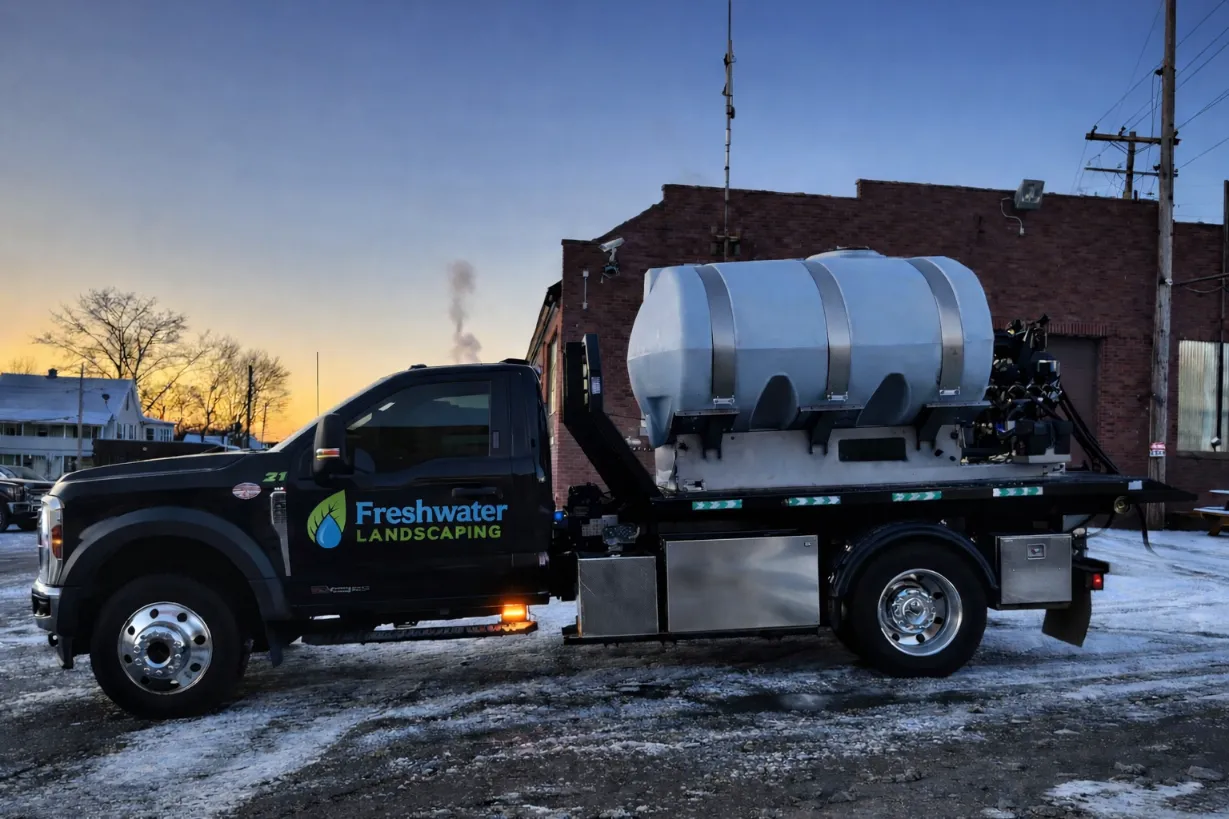
St. Louis Park doesn't aim for bare pavement. The city says so directly: it has no bare-pavement or ice-free requirement, and it salts its streets to keep driving surfaces safe. Whatever ice control your own lot and walks need has to come from you.
Our salt comes from 100 tons kept at our own shop, so a run of storms doesn't put your lot in line behind a supplier. We apply it following the Minnesota Pollution Control Agency's Smart Salting best practices and record each application in your service log.
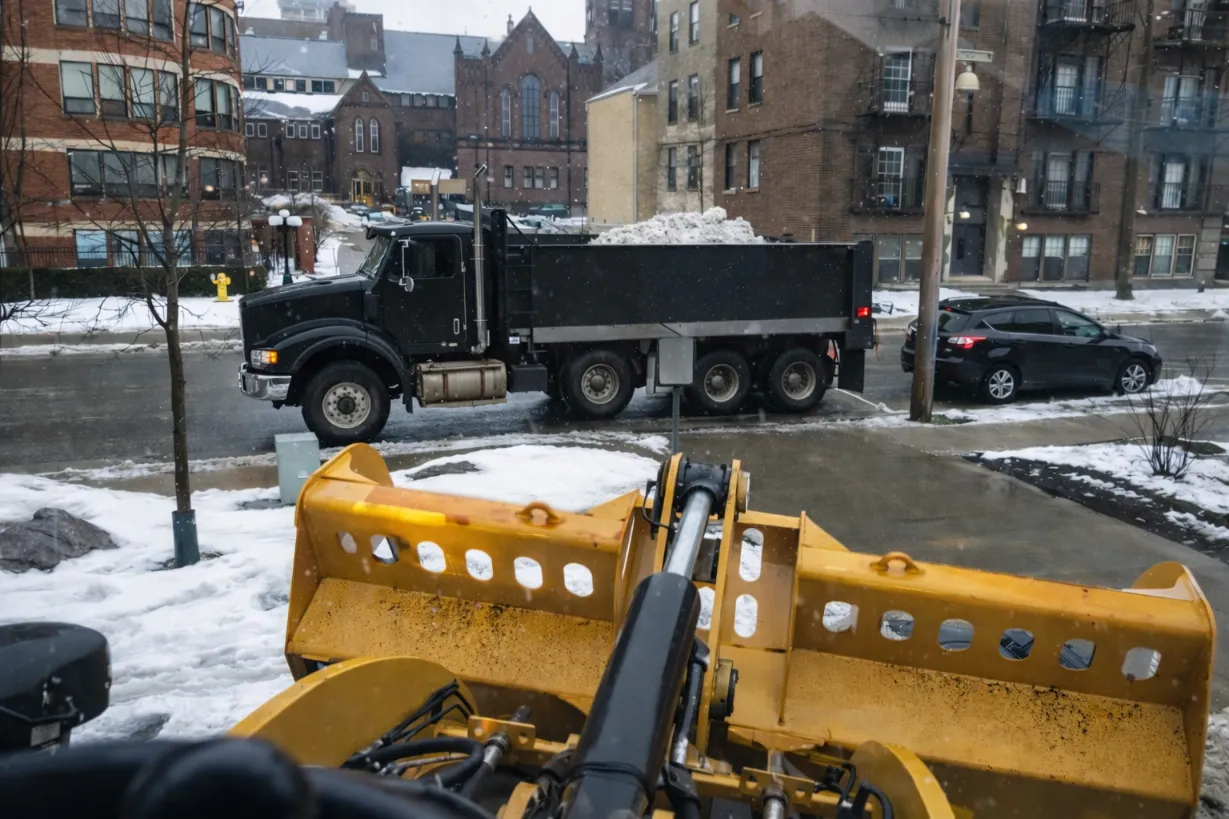
On a tight St. Louis Park lot, room for snow runs out early. Once the piles start eating stalls or hiding oncoming traffic at your exits, the only fix is taking snow off the property.
Our wheel loaders load it out and DOT-compliant dump trucks carry it away, which gives back the stalls and the sight lines the piles took. The city runs into the same squeeze on its own streets: when boulevards fill, it notes that snow banks creep a couple of feet or more into the street along each curb.
Your trigger depth sets when crews come out, and nothing moves the cost of a contract more. St. Louis Park commercial accounts pick from four levels:
If you're unsure which level fits, tell us who uses the property and when, and we'll suggest one.
Commercial snow isn't sold off a price list. Each bid is written for one property, and it turns on four things: the size of the lot, the trigger depth, how much sidewalk there is, and whether snow has to be hauled away.
Before the season starts, each property gets a site map marking push zones and drains, so any crew that shows up runs it the same way.
Every commercial site we service runs on Yeti, our snow management platform. It records when a crew arrives and when it leaves, stores photos from each visit, and keeps a log of every salt application.
That record is what you reach for if a slip-and-fall claim ever lands on your desk: the conditions, the timing, and what was put down. Before the first service we send a certificate of insurance that names your business as additionally insured, and you get direct cell numbers for the people running each storm rather than a call center.
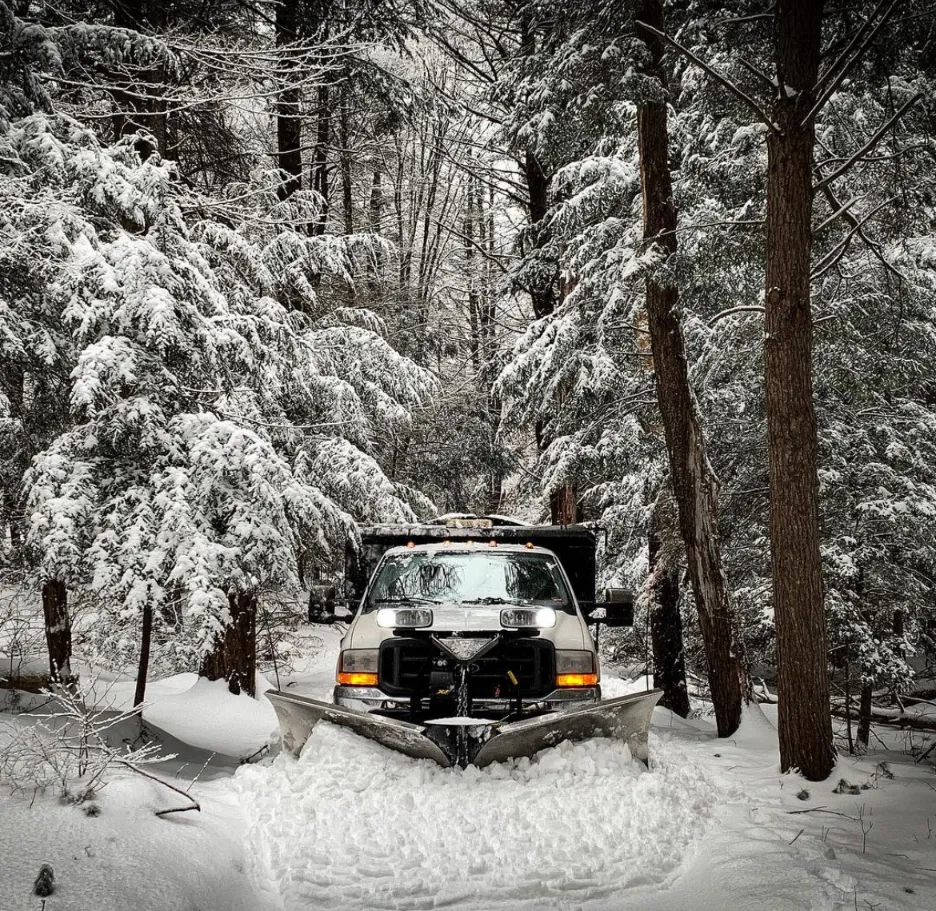
Commercial properties are our focus in St. Louis Park, and we also take residential driveways. Driveways are cleared within 10 hours after snowfall stops, on a 2 inch trigger, and every residential truck runs rubber cutting edges that are gentle on pavers and stamped concrete.
For homes, the city's sidewalk deadline is six hours of remaining daylight after snow stops, or noon the following day, whichever is longer.
St. Louis Park considers a snow emergency once about 3 inches has accumulated, and it can declare one ahead of a storm forecast to bring 6 inches or more. During a snow emergency, cars parked on the street can be ticketed day or night and towed if still there 12 hours after the ticket. When the city plows curb to curb after a big storm, it describes the result as pushing snow back as far as possible, which is often less than the full street width. Snow removal details from the City of St. Louis Park and the St. Louis Park City Code.
Freshwater Landscaping
3425 Shoreline Dr Ste B, Wayzata, MN 55391
(612) 999-8067
Office: Mon-Sun 8am-6pm
Under City Code Section 24-342, commercial properties must clear the abutting public sidewalk within four business hours after snowfall stops or by the start of the next business day, whichever is shorter. The requirement includes snow plowed off the street onto the sidewalk. Residential properties get six hours of remaining daylight or until noon the next day, whichever is longer.
Yes. Your lot is plowed at the trigger depth in your contract, but sidewalks are shoveled and salted after every snowfall. The city's sidewalk deadline applies no matter how little snow falls, so the walk can't wait for the lot.
No. The city clears about 52 miles of community sidewalk, but it limits sidewalks and trails to snow removal and doesn't treat them with salt or sand. It also has no bare-pavement or ice-free requirement for its streets.
No. St. Louis Park says pushing or blowing snow back into an alley is against city ordinance, because it causes driving problems for everyone using the alley. Snow has to be stacked on the property or hauled away.
There are four: zero tolerance, half inch, one inch and two inch. With zero tolerance, a crew is staged on site before snow begins and works through the storm. Two inch is the typical trigger for a commercial lot.
Yes. Commercial properties are our focus here, but driveways are cleared within 10 hours after snowfall stops on a 2 inch trigger, with rubber cutting edges on every residential truck. The front walk and steps come with it.
Each commercial bid is written for one property, based on lot size, trigger depth, sidewalk length and whether snow must be hauled away. You can buy it as a seasonal flat rate, per push, or as a prepaid bundle of plow visits and salt applications.

When the snow is gone, the same company keeps your grounds in shape through our commercial landscaping service.
You keep one vendor who already knows the property, from the first snowfall to the first mow.
Routes fill and then we're closed. Send us the basics on the property: lot size, sidewalk frontage, when the first people arrive, and whether you need zero tolerance. We'll write a bid for your site.