MINNETONKA BEACH, MINNESOTA
Your driveway is cleared within 10 hours after snowfall stops. In Minnetonka Beach, that matters more than it would almost anywhere else on the lake, because the driveway is where every car has to go.
City Code Section 601 bars parking on Minnetonka Beach streets except in areas the City Council has designated for it, and even there a clear lane at least 20 feet wide has to stay open in each direction. Guests, a second car, the contractor who shows up the morning after a storm: none of them have the street to fall back on.
When plowing needs the full width of a street, the Council can also post temporary no-parking signs, at least 4 hours before snow removal starts, and they apply even to cars that were already parked there. A vehicle that gets in the way of snow removal can be towed.
So the job here is the whole driveway, not a lane down the middle. Your property goes on the route before the first storm, service runs on a 2 inch trigger, and the drive, the front walk and the steps are all part of it.
Homeowners around Lake Minnetonka have left us 80+ five-star Google reviews.
1.5 million square feet of commercial lots on contract and counting, for clients including Thunderbird Aviation at Flying Cloud Airport, Holiday Inn Express and Comfort Inn.
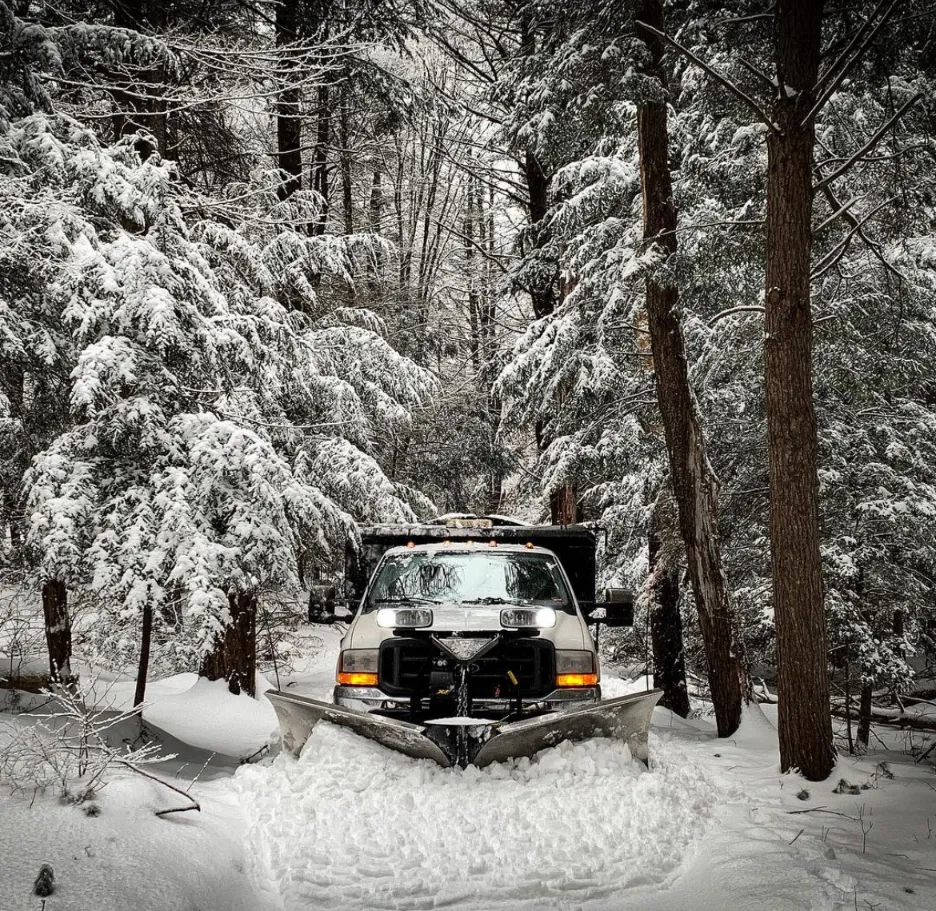
On most streets around the lake, a driveway that loses a few feet of width to the snowbank is an inconvenience. In Minnetonka Beach it costs you a parking space, because the street is rarely somewhere a car can go.
We clear the full width of the drive, not a single lane, using rubber cutting edges on every residential truck. They protect pavers, stamped concrete and fresh asphalt that a steel edge can chip.
Before the ground freezes, we stake the edges of every drive we service, so crews know where pavement ends and lawn begins when both are under a foot of snow.

A clear driveway only helps if people can get from it to the door. The front walk and entry steps are part of every visit, not an add-on.
Steps are shoveled by hand. A machine is the wrong tool on stone treads and tight landings, and a hand crew can clear them without chipping an edge or scattering snow back onto the walk.
When your driveway is the only place visitors can park, the walk from the drive to the door carries every guest who comes over.
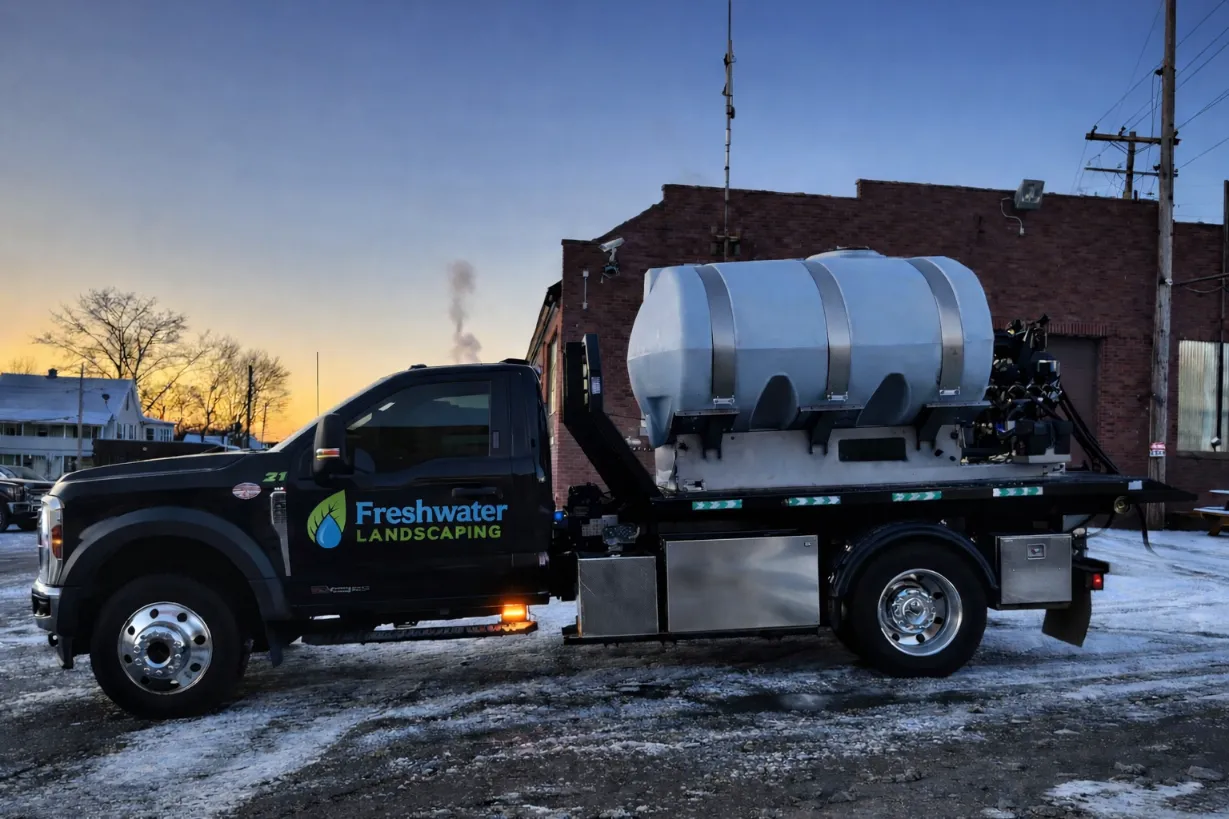
A drive cleared in the morning can glaze over by evening. Afternoon sun melts what's left along the edges, the meltwater runs across the pavement, and it freezes the moment the temperature drops.
We treat the drive, the walk and the entry steps with timing built around that refreeze, and we keep 100 tons of salt at our own shop so a busy week never leaves your drive waiting on a supplier.

Every push leaves the pile a little bigger, and on a drive that has to hold every car you own, the banks start taking width by midwinter. The turnaround gets tighter, and backing out gets harder to judge.
When there's room elsewhere on the property, we move the snow there. When there isn't, we load it into trucks and haul it away, and the drive gets its full width back.
Most standard driveways run $200 to $250 a month, November through April, as one seasonal price billed monthly.
Standard means up to two cars wide, about 20 feet, and up to 60 feet long, which is roughly 1,200 square feet. Longer drives, wide motor courts and extensive step work are priced to fit.
Every number above assumes the standard 2 inch trigger. A lower trigger adds visits, so it moves the price more than a longer drive does. Per push service is available too; call us and we'll talk through which one fits your winter.
Minnetonka Beach's parking rules are in City Code Section 601, amended most recently by Ordinance 163, effective January 18, 2026. The section also caps any vehicle at 48 consecutive hours in one spot on a public street, and lets police remove an unattended vehicle that hinders snow removal. Parking rules from the City of the Village of Minnetonka Beach City Code.
Freshwater Landscaping
3425 Shoreline Dr Ste B, Wayzata, MN 55391
(612) 999-8067
Office: Mon-Sun 8am-6pm
Only where the City Council has designated parking, and even there City Code Section 601 requires a clear lane at least 20 feet wide in each direction. When plowing needs the full street, the Council can post no-parking signs at least 4 hours ahead, and cars parked in the posted zone have to move.
Within 10 hours after snowfall stops. The clock starts when the snow ends, not when a truck leaves the shop.
Every residential truck runs rubber cutting edges, which protect paver driveways, stamped concrete and fresh asphalt that a steel edge can chip. We also stake drive edges before the ground freezes so crews can see where the pavement ends.
Service triggers at 2 inches of snow, and your property is on the route for every storm that reaches it. A lower trigger is available and priced higher, since it adds visits.
Yes. The front walk and entry steps are part of every visit, and steps are shoveled by hand rather than by machine.
Yes. Commercial clients choose their trigger, from 2 inch down to 1 inch, half inch or zero tolerance with crews staged on site before the snow starts. Every commercial visit is logged in Yeti with time stamps and photos.
Most standard driveways run $200 to $250 a month from November through April, set as one seasonal price and billed monthly. Larger drives and extensive step work are priced to fit.

The crews that plow your drive in January are the same company that designs, builds and maintains landscapes around the lake the rest of the year.
One contact, one crew that already knows the property, and nothing to relearn when the season changes.
Routes fill and then we're closed. Tell us about your property and what needs clearing, and we'll get you a spot. The storm-alert checkbox is optional. Check it and you'll get a text the moment crews head out.